CONNECTIVITY ATLAS / PACIFIC
Pacific Connectivity
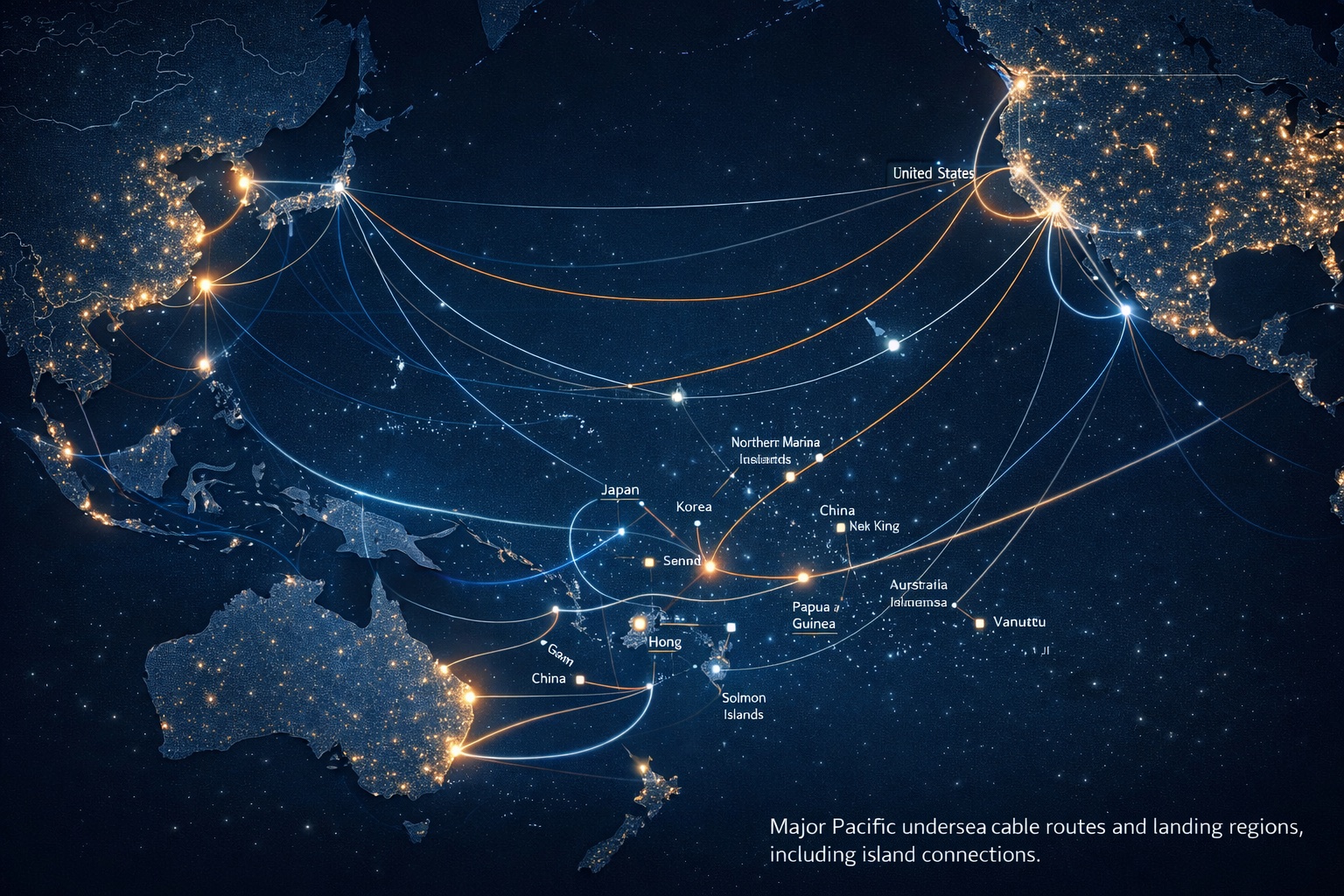
The Pacific undersea cable network connects North America, Asia, Oceania, and key island regions. These routes shape where low-latency compute can operate at global scale—especially as AI demand expands across multiple time zones and economic zones.
Why the Pacific Matters
The Pacific carries some of the world’s most consequential connectivity corridors. AI infrastructure increasingly depends on bandwidth, redundancy, and latency performance across the U.S. West Coast, East Asia, Southeast Asia, and Oceania.
As demand grows, network geography quietly influences where compute clusters can scale—often as much as real estate availability or local incentives.
Islands and Strategic Advantage
Island regions connected by high-capacity cable landings can become valuable nodes in a distributed AI landscape. When connectivity is paired with stable baseload power, physical security, and data governance, islands can support resilient infrastructure that would otherwise be limited by distance.
GridSignal monitors these convergence points to understand how future AI capacity expands beyond traditional mainland hubs.